Ginseng face serum: benefits and how to use it
In short: ginseng is used in skincare to revitalize the look of tired skin, support radiance and the comfort of the skin barrier. Studies are encouraging but mostly done in the lab: it is not a miracle product. Apply 3 to 4 drops morning and/or evening, before your cream.
Made popular by Korean skincare, ginseng has found its place in facial routines. What can you really expect from it? Here is an honest guide, drawing on what Amorepacific, Allure and the scientific literature say about it.
What is ginseng in skincare?
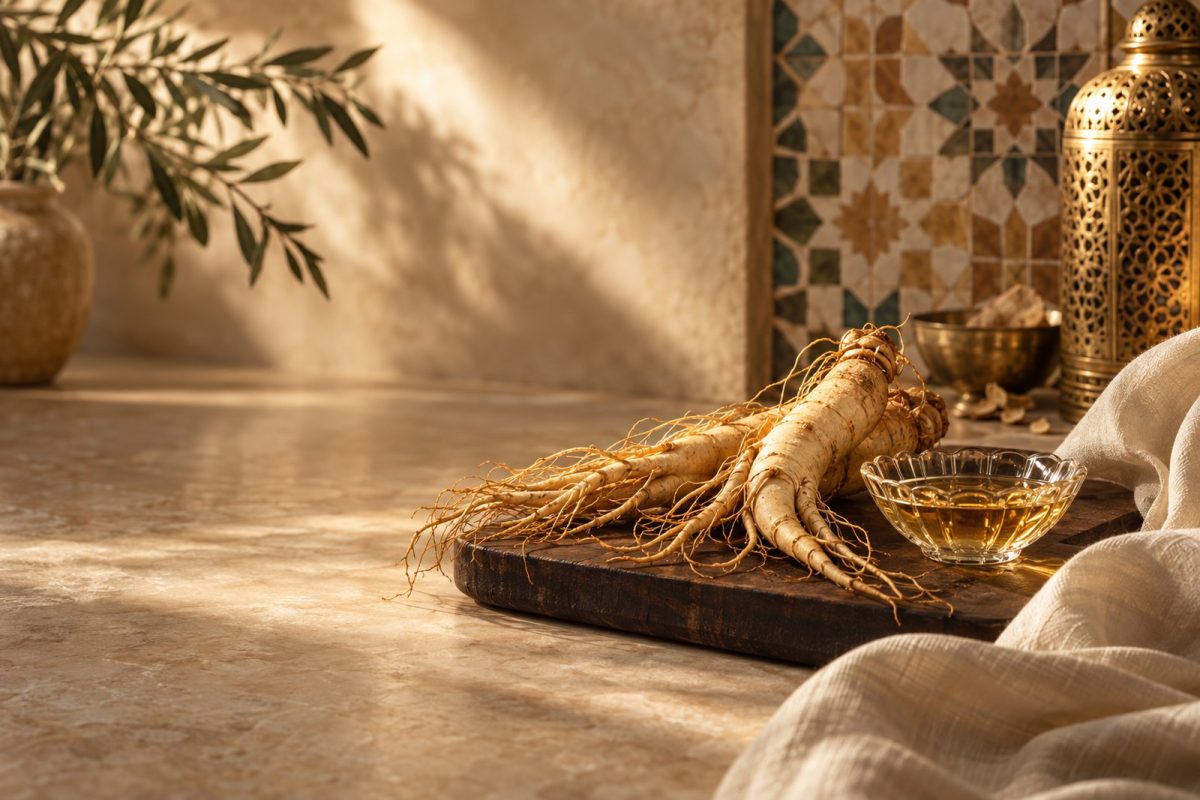
Most often it is Panax ginseng, whose roots contain ginsenosides. In skincare, it is used as a root extract, sometimes fermented, for its image of vitality and its antioxidant properties.
What are the benefits for the skin?
- Radiance and vitality: helps give tired skin a healthy glow.
- Supports the firm look of the skin.
- Supports the skin barrier and comfort.
- Antioxidant action against environmental stressors.
What do studies say?
A review published on PubMed Central describes effects of ginseng and ginsenosides on skin cells and in animal models, with more limited clinical data. Amorepacific, which has made it a pillar of its research, presents ginseng as an active that supports vitality and radiance, with a cautious “fact check”. Key takeaway: a good supporting active, not a treatment.
Ginseng or other revitalizing actives?
Vitamin C, niacinamide, centella and green tea also target radiance and comfort. Ginseng stands out for its tradition of use. In our formula, it is combined with hyaluronic acid, centella and aloe vera to suit a variety of skin types.
Ginseng at other brands
- Beauty of Joseon: Revive Serum, ginseng + snail mucin, a K-beauty star.
- Erborian: Ginseng Super Serum, a Western take on K-beauty.
- Sulwhasoo, Donginbi: luxury and traditional Korean skincare based on red ginseng.
- Cosmogenesis Labs: ginseng serum with 10% ginseng extract, hyaluronic acid 2%, centella 0.5%, aloe vera 1%, 30 ml, vegan.
For which skin?
- Tired, dull skin lacking tone.
- Skin stressed by the change of season, air conditioning or lack of sleep.
- Skin that feels slightly tight.
How to use it
- On clean skin, 3 to 4 drops.
- Warm between your palms and press gently, without rubbing.
- Apply your cream, then SPF 50 in the morning.
It pairs with hyaluronic acid and night cream in the intense hydration & repair routine. See also the order to apply your skincare.
Combinations
Compatible with vitamin C, niacinamide and peptides. With retinol or an exfoliant in the evening, use ginseng afterwards, or alternate.
Tired skin: habits that matter just as much
- Regular sleep, water and a varied diet.
- SPF 50 every morning.
- Gentle cleansing, without water that is too hot.
- Regular hydration, especially with air conditioning.
Precautions
Test in the crook of the elbow. Avoid contact with the eyes. People allergic to plants of the Araliaceae family should seek advice.
Red, white or fermented ginseng: what is the difference?
- White ginseng: root dried as it is. It is the most common form in cosmetic extracts.
- Red ginseng: root steamed then dried. This process changes the ginsenoside composition. It is highlighted by premium Korean brands.
- Fermented ginseng: extract transformed by micro-organisms, presented as easier for the skin to use. Comparative data in humans remain limited.
A review published in 2024 in the Journal of Ginseng Research takes stock of these forms and of ginseng by-products in cosmetics. It confirms the antioxidant and soothing interest observed in the laboratory, and the need for more clinical trials.
Ginseng and sensitive skin
Ginseng is generally well tolerated. Sensitive skin reacts more often to fragrance, alcohol or an overloaded formula than to the extract itself. Do a 48-hour test in the crook of the elbow, start with one application a day, and prefer a short formula. Our serum combines ginseng with ingredients known for comfort: hyaluronic acid, centella and aloe vera.
Ginseng with retinol or retinal: a good idea?
Some Korean brands combine ginseng and retinal in the same bottle. Ginseng does not cancel the effect of a retinoid and does not prevent irritation on its own. In a routine, the rule remains simple: retinol in the evening, on dry skin, and the ginseng serum in the morning or on evenings without retinol. See our guide retinol for beginners.
Sample routine with a ginseng serum
Morning: gentle cleanser, Sérum Régénérant au Ginseng, light cream, SPF 50.
Evening: cleanse, hyaluronic acid hydrating serum, then the Crème Nuit Réparatrice Anti-Âge.
This trio matches the intense hydration & repair routine.
Dull skin after summer, Ramadan or a tiring period
Lack of sleep, shifted schedules, heat, less water during the day: some periods leave the complexion grey and the skin less comfortable. This is where a revitalising serum has its place, with simple habits: gentle cleansing in the evening even when coming home late, hydration morning and evening, SPF in the morning, and no new strong active while the skin feels tight. A light one to two minute massage when applying the serum also helps give a healthy glow.
How long before you see an effect?
Comfort and a rested-skin feeling are often felt from the first days, thanks to the hydrating ingredients. For radiance and a more toned look, allow four to eight weeks of regular use. As with any active, the effect also depends on sleep, hydration and sun protection.
How to recognise a good ginseng serum
- The INCI name: “Panax Ginseng Root Extract”, ideally in the first half of the list.
- The dosage: few brands state it. Our serum shows 10% ginseng extract.
- Supporting ingredients: hyaluronic acid, centella, panthenol or aloe vera for comfort.
- Fragrance: a heavily scented serum is less suitable for sensitive skin.
- The bottle: opaque or tinted, tightly closed, kept away from heat.
Ginseng or vitamin C for radiance?
Vitamin C is the most studied radiance active, especially for the look of dark spots. Ginseng is better suited to tired or sensitive skin that does not tolerate an acidic serum well. The two complement each other: vitamin C in the morning, ginseng in the evening, for example. To choose, see our vitamin C serum guide and our range of face serums.
Sources and further reading
- PubMed Central: review on ginseng and the skin
- Amorepacific: benefits of ginseng
- Allure: ginseng and skincare
- Review 2024: ginseng and ginseng by-products for the skin (PubMed)
Informational content that does not replace the advice of a healthcare professional. If in doubt, for reactive skin, during pregnancy or for a dark spot that changes, consult a dermatologist.
Frequently asked questions
What is a ginseng serum for?
To revitalize the look of tired skin and give it radiance, often with hyaluronic acid.
Is there scientific evidence for ginseng?
Laboratory and model studies exist, with more limited clinical data. It is a supporting active ingredient.
Morning or evening?
Both are possible, before your cream.
Is it suitable for sensitive skin?
Generally yes, after a test in the crook of the elbow.
What should it be paired with?
With a hyaluronic acid serum and a night cream.
What is the difference between red ginseng and white ginseng?
Red ginseng is steamed then dried, which changes its ginsenosides. White ginseng is simply dried. Both are used in cosmetics, and comparisons in humans remain limited.
Is ginseng suitable for sensitive skin?
Generally yes. Do a 48-hour test in the crook of the elbow and choose a short formula, without strong fragrance or alcohol.
Can a ginseng serum be used with retinol?
Yes, at different times: retinol in the evening, ginseng in the morning or on evenings without retinol.