Dry or dehydrated skin: how to tell the difference
In short: dry skin is a skin type that lacks lipids, on a lasting basis. Dehydrated skin is a temporary state that lacks water, and it also affects oily skin. The first needs rich creams and ceramides, the second hyaluronic acid and gentle habits. Many skins need both.
Dry skin and dehydrated skin are often confused. Yet these two states do not call for quite the same care, and a wrong diagnosis explains many routines that do not work. Here is how to tell them apart, and how to adapt your care to the Moroccan climate.
Dry skin: a skin type
It is a skin type, lasting, that produces little sebum and lacks lipids. It is often thin, matte, with barely visible pores, and prone to tightness and rough patches, on the face as on the body. It tends to redden and flake in cold or windy weather. It can become more marked with age and at menopause.
Dehydrated skin: a temporary condition
All skin types, even oily ones, can be dehydrated. It is a lack of water in the upper layers, caused by heat, air conditioning, cold, sun, fatigue, a cleanser that is too harsh or an active introduced badly. The skin feels tight, looks dull, and fine lines appear when it is gently pinched.
The simple test to tell the difference
- The pinch: gently pinch your cheek. If fine lines appear and disappear quickly, the skin lacks water.
- The tissue: two hours after cleansing, press a tissue on the T-zone. Traces of oil together with tightness point to dehydrated oily skin.
- Time: dry skin is dry all year round; dehydrated skin changes with the season, the routine or lifestyle.
Signs at a glance
- Dry skin: roughness, flaking areas, barely visible pores, lasting discomfort, need for a rich cream.
- Dehydrated skin: tightness after a shower, dull complexion, fine lines, make-up that settles into lines, skin that can shine at the same time.
- Dry and dehydrated skin: both at once, very common in winter and after 40.
Common causes in Morocco
- Air conditioning in summer and heating in winter, which dry out the air.
- Sun and wind, especially in the South and in the mountains.
- Hard water in some cities, which leaves the skin feeling tight.
- A hammam that is too hot or too long, followed by a vigorous scrub.
- Soaps and foaming cleansers that are too harsh.
- Strong actives (retinol, acids) introduced too quickly.
Caring for dehydrated skin
- Gentle cleanser, lukewarm water, no rubbing.
- A hyaluronic acid serum on slightly damp skin.
- A cream suited to your skin type, light if the skin is oily.
- SPF 50 in the morning.
- Pause exfoliants and retinol as long as the skin feels tight.
Within a few days, the skin generally regains its comfort. See our guide hyaluronic acid: benefits and how to use it.
Caring for dry skin
- Cream or oil cleanser, only once a day if the skin is very dry.
- Hydrating serum on damp skin.
- A cream rich in lipids: ceramides, squalane, butters. In the evening, the Crème Nuit Réparatrice Anti-Âge combines hyaluronic acid, squalane and ceramide.
- A balm or oil as the last layer on flaking areas, if needed.
The American Academy of Dermatology advises applying cream within minutes of showering, while the skin is still damp, and choosing creams and balms over light lotions.
Ingredients to know
- Humectants (attract water): hyaluronic acid, glycerin, low-dose urea, panthenol.
- Emollients (soften): squalane, plant oils, ceramides.
- Occlusives (limit evaporation): butters, waxes, petrolatum.
Dehydrated skin mainly needs humectants; dry skin needs all three, in layers. A 2018 review (Dermatologic Therapy) details, for example, the role of urea in caring for dry skin.
Habits that matter as much as products
- Short, lukewarm shower, not hot.
- Shorter hammam, gentle scrub, then cream right afterwards.
- A humidifier or a bowl of water near the air conditioning.
- Drink regularly, even though the water you drink is not enough to hydrate the skin.
- Protect the face from wind and cold.
Dry skin after 40 and at menopause
With age, the skin produces less sebum, and falling oestrogen at menopause often makes it thinner and drier. Skin that used to be combination can become dry on the cheeks. The routine then evolves: gentler cleanser, hydrating serum morning and evening, richer cream at night, and fewer scrubs. Retinol remains possible, but it is introduced more slowly, with the sandwich method.
When should you see a doctor?
Severe itching, red patches, cracks, skin that flakes despite care: it may be eczema, dermatitis or another skin condition. A dermatologist will make the diagnosis.
The ready-made routine
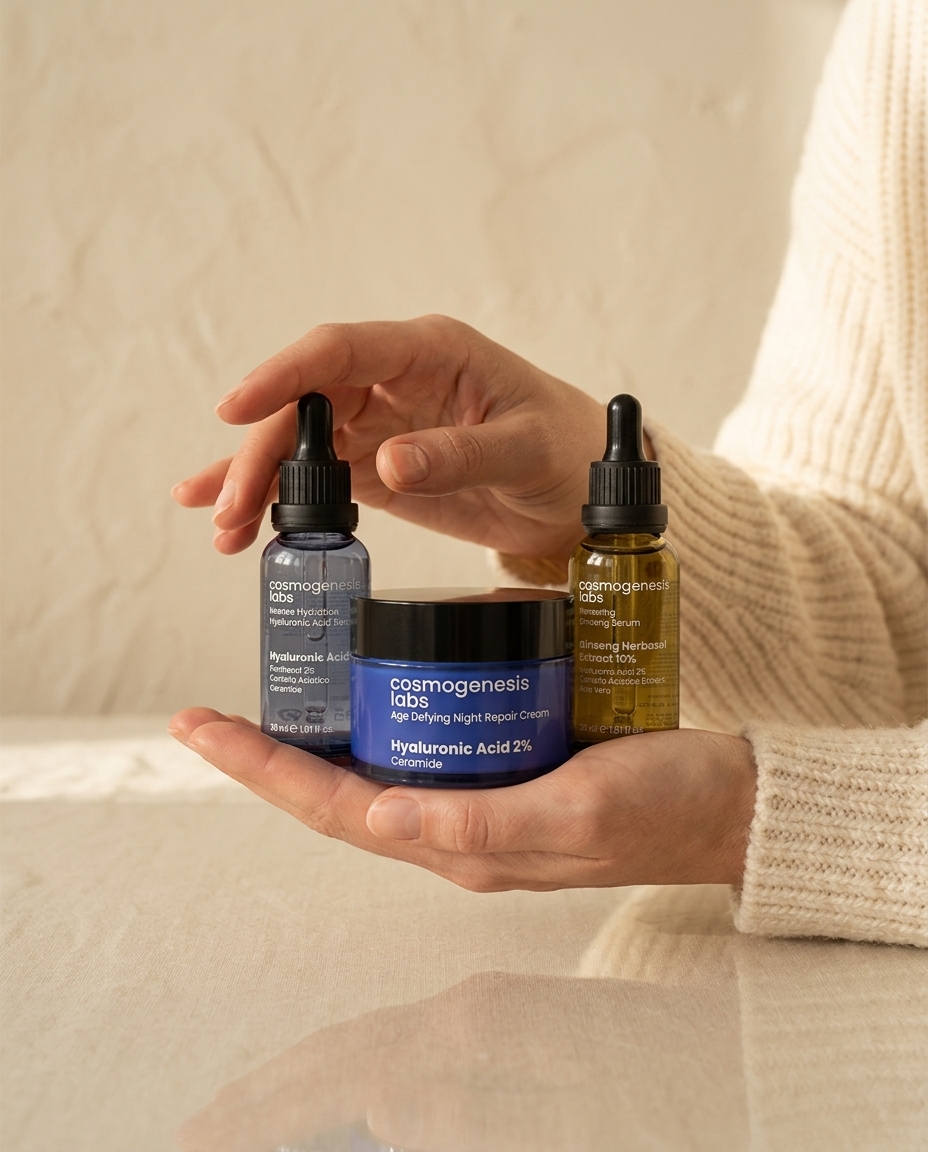
The Routine Hydratation Intense & Réparation brings together hyaluronic acid serum, ginseng serum and night cream. To choose a texture, see our face creams. And for skin that shines and feels tight, read the oily skin routine.
Sources and further reading
- American Academy of Dermatology: relieving dry skin
- American Academy of Dermatology: choosing a moisturiser
- Review 2022: factors that influence skin hydration (PubMed)
- Review 2018: urea in skincare (PubMed)
Informational content that does not replace the advice of a healthcare professional. If in doubt, for reactive skin, during pregnancy or for a dark spot that changes, consult a dermatologist.
Frequently asked questions
How do I know if my skin is dry or dehydrated?
Dry skin lacks lipids all year round: roughness, flaking areas. Dehydrated skin temporarily lacks water: tightness, dull complexion, fine lines when pinched.
Can oily skin be dehydrated?
Yes. It shines and feels tight at the same time. It needs hyaluronic acid and a light cream, not a stronger cleanser.
Which serum for dehydrated skin?
A hyaluronic acid serum, applied to slightly damp skin and covered with a cream.
Which cream for dry skin?
A cream rich in ceramides, squalane or butters, applied right after washing, on still damp skin.
Is drinking water enough to hydrate the skin?
No. Drinking is good for health, but facial skin needs hydrating care and a barrier in good condition.
Does the hammam dry out the skin?
A session that is too hot or too long with a vigorous scrub can dry it out. Shorten it, scrub gently and apply a cream right afterwards.